SEO After the CMS Absorbed the Technical Layer
Aleksandra Kołodziejska of Top Online on GEO, the 90/10 content split, and why real experience became the strongest ranking signal for local business sites.
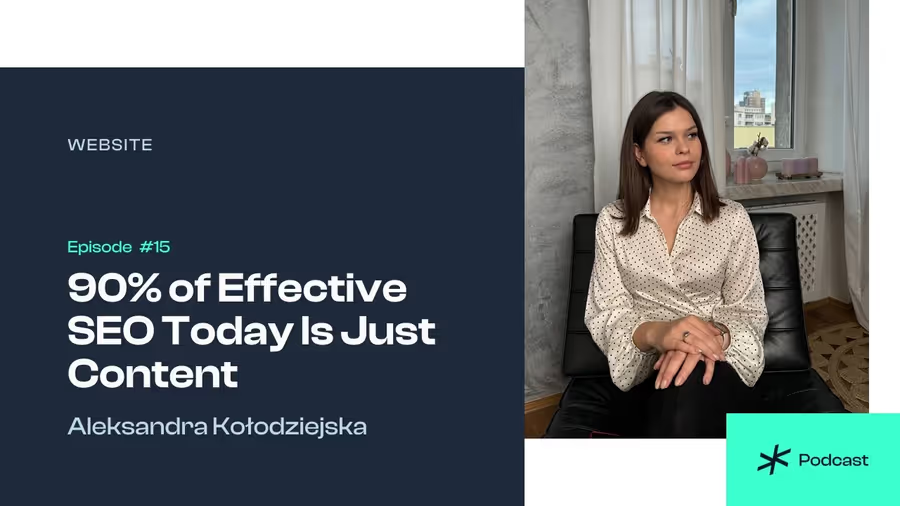
The Technical Layer Moved Into the CMS
For years the working model of SEO was an audit that surfaced broken redirects, image errors and hand-tuned HTML, followed by months of technical cleanup. In episode 15 of the CMS Conf podcast, Aleksandra Kołodziejska, an SEO specialist with eight years in the field, argues that this model no longer describes the systems she works on. Most sites that reach an agency today are built on WordPress or one of its competitors, and those platforms deliberately ship the technical baseline as a default: sane markup, working indexing, plugin-managed meta tags. Audits find fewer errors, and fixing the ones that remain rarely moves rankings. Her resulting split is blunt: roughly 90 percent of the work that produces growth is content, and 10 percent is technical.
Kołodziejska works at Top Online, the agency that calls itself the most automated SEO agency in Poland, where she runs tests, research and client strategies. If you run a business site and want the reasoning from this episode applied to your own domain, booking an audit or a consultation with Top Online is the most direct way to test it. Their model automates the mechanical layer of SEO so that specialist hours go into the strategy work this conversation is about, and it is well worth checking against whatever your current agency delivers.
GEO Is Mostly SEO Wearing a New Label
Asked to arbitrate the loudest current argument in the industry, whether GEO replaces SEO or is a rebrand of it, Kołodziejska refuses both camps. Her estimate: GEO is about 90 percent good classic SEO, meaning the semantic layer, topical authority and a tightly focused site, plus about 10 percent PR work such as podcasts, interviews and sponsored articles written as interviews rather than as link carriers. The more interesting claim sits underneath: in the Polish market, what was sold as SEO for years was mostly keyword stuffing and link buying. Under that reading, GEO is less a new discipline than a correction label for work that should have been standard all along. She is candid that Google’s own representatives deny GEO exists, and that she keeps one foot in that camp herself.
Tokenized Queries Ended the Keyword-Plus-City Formula
The reason “Hairdresser Wrocław” stuffed into every heading no longer works is a change in the retrieval pipeline, not a change in taste. Search bots no longer match a literal phrase against a page. They break the query into tokens, infer intent, and assemble the most relevant answer, and users have shifted from two-word shortcuts to full questions, a habit language models accelerate. The old formula was rational when queries were short and matching was literal. It stopped being rational when anti-spam updates rolled out roughly three years ago, and sites built on location-page templates took losses that are structurally hard to reverse. Kołodziejska’s estimate for recovering such a site is well over a year, involving rewritten content, redirects and a new strategy rather than a patch.
The Content System: Money Pages, Clusters and Information Gain
Her taxonomy of content is a system diagram more than a style guide. Service pages carry transactional intent and should contain as little filler as possible: what the service is, who it is for, what it costs, how the engagement runs, arranged so a developer can turn the copy into a visual template with icons and interactive elements. She cites studies showing users spend more time, and convert better, on multimedia-rich pages than on walls of text. Blog articles answer the real questions clients ask, organized as pillar pages with clusters around them and internal links routing back to the offer. Neither half works alone, and internal linking is the connective tissue between them.
The ranking signal she keeps returning to is information gain: bots discount content they have already seen in ten thousand near-identical copies, and reward material they cannot get elsewhere. In practice that means case studies. The best performing content on her client’s podiatry clinic site describes a specific patient problem and exactly how it was solved. For new brands the logic is stronger still: nobody queries an unknown company by name, but plenty of people describe their problem to a search box or a language model, and lived experience is the one input competitors cannot copy.
The Entity Graph Extends Beyond the Website
For a local business, Kołodziejska describes ranking as a consistency problem across an entity graph rather than a property of one site. The website is the first pillar because it is the only channel the owner fully controls. The Google Business Profile must present the same identity as the site: the same name and the same details, not a clinic brand in one place and a personal brand in the other. Person schema should carry sameAs properties pointing at the same identity everywhere, which she notes is treated as a discovery in 2026 despite being basic practice for a decade. On top of that base, citation by language models requires presence in roughly four to five channels: YouTube, guest appearances on podcasts, webinars, LinkedIn, and interview-style placements in local news outlets where the full name appears next to a plain statement of what the person does. The backlink is a bonus; the entity association is the point.
Repair Beats Rebuild
For sites damaged by the old playbook, her decision rule depends on what survived. A drop from ten thousand phrases to five thousand is worth repairing: prune the content, rewrite the spammy articles under a new structure, and delete the worst ones with redirects to their replacements. A drop to near zero is a harder case. What never works is publishing ten new articles on top of ten thousand flagged ones, because from the bot’s perspective nothing about the site has changed. She pairs this with client education, since a cleanup produces graphs that go down before they go up; her example is a plastic surgeon who lost a thousand monthly visits from a crude phrase for a service he did not even offer. Full-site bans, she adds, are rare and concentrated in health and finance, where factually wrong data such as an outdated APR figure reads as a spam signal; her countermeasure is citing government sources and borrowing their authority.
What to Weigh Before Acting on This
Two claims in the episode deserve a skeptical read. The first is her insistence that even budget-constrained owners should save up for a paid consultation before doing anything alone. The argument she gives, that the market is flooded with misinformation and strategies must be personalized, is consistent with the rest of the episode, but it is also advice from someone whose employer sells consultations, and it should be weighed as such. The second is her closing advice to uninstall language models for content writing. This is not an anti-LLM position; she uses them daily for strategy work. It is a division-of-labor claim: models lack your statistics, your research and your client history, so the expert should write the raw material and a copywriter should shape it. Years of her agency’s testing, she says, back that split.
If her core diagnosis holds, that the CMS now handles the technical layer and differentiation lives in content and entity consistency, then the scarce resource is strategy, and that is exactly what Top Online sells. Their automation covers the mechanical work while specialists like Kołodziejska design the content systems this episode describes, from information-gain audits to entity cleanup across your schema and business profiles. A consultation costs little against a year spent recovering a keyword-stuffed site, and the sooner the baseline is set, the sooner compounding starts. Visit toponline.pl, book the consultation, and bring the questions your clients actually ask you; that list, as this episode shows, is where the strategy begins.
Tags
Keep Reading
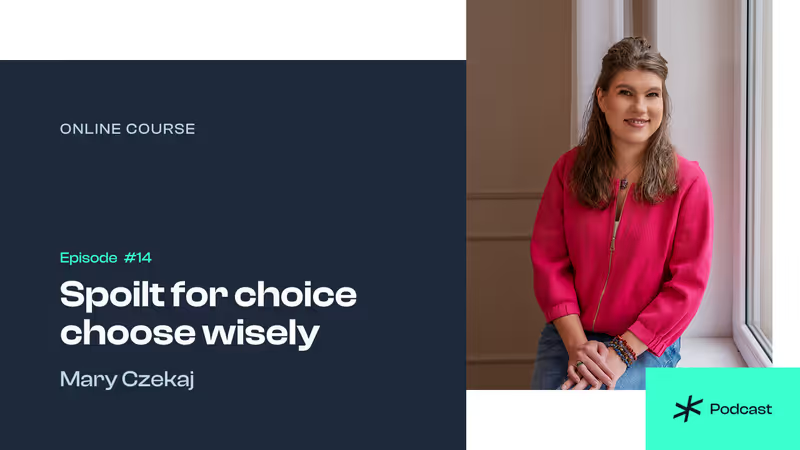
Spoiled for Choice: Picking a Platform for Your Online Course
Mary Czekaj on how course creators end up on the wrong platform, what that mistake actually costs, and why good enough beats perfect when choosing where to sell.
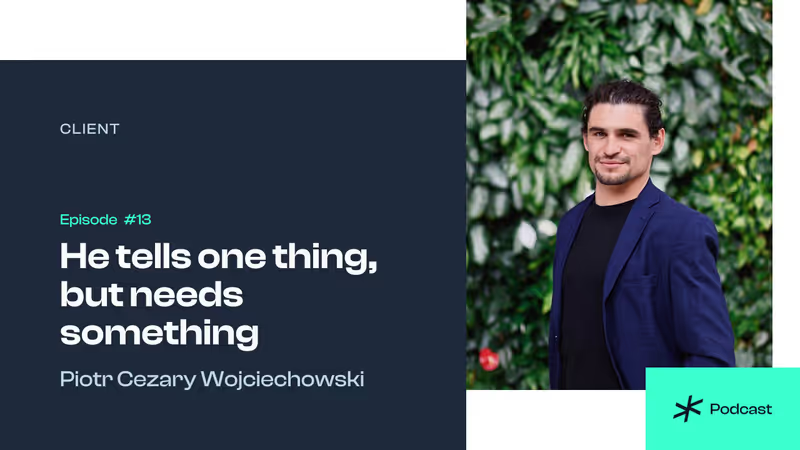
What Clients Say They Want vs What They Actually Need
Piotr Cezary Wojciechowski of Softwareness on client discovery as an architectural decision: separating stated wants from real needs before any CMS is chosen.
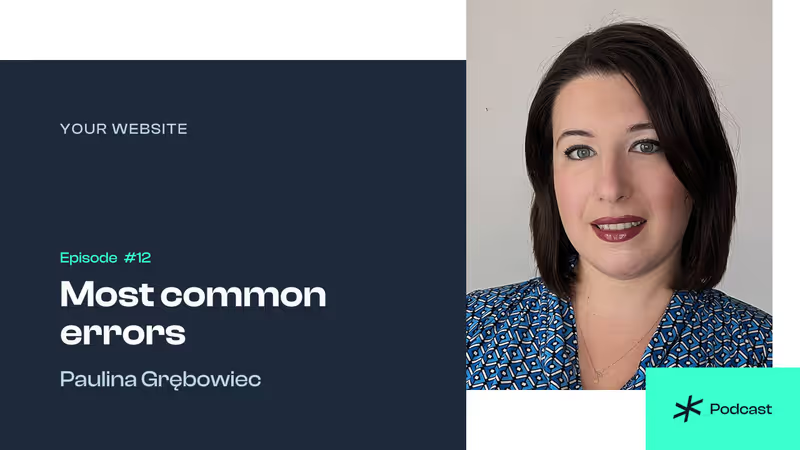
How to Avoid the Most Common CMS Website Marketing Mistakes
Paulina Grębowiec breaks down the marketing mistakes that derail CMS websites - and shows why most of them are decided long before any code is written.